Pendant or Panopticon: Reading the AI Clause in a UK Care Home Contract
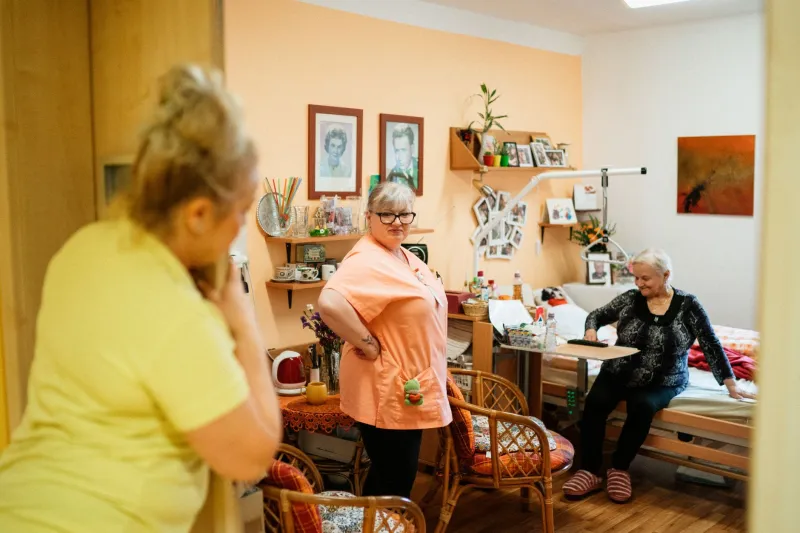
If a relative of yours moved into a residential home in the past year or two, the room may have come with more than a wardrobe, a call bell and a plastic jug of water. Small white discs on the ceiling. A pad under the mattress. A camera high in the corridor corner that doesn't quite look like a camera. None of it is dramatic, and that's rather the point.
Then, somewhere in the paperwork, a paragraph mentions "sensor-based monitoring" or "assistive technology" and asks you — or your mum — to tick a box.
This piece is about what happens after that tick.
What the equipment actually is
Most of what gets marketed as "AI care technology" falls into three fairly boring buckets.
Passive sensors. Motion detectors, door contacts, pressure mats, wearable pendants, and radar units that detect presence and breathing without a lens. These report things like: someone got out of bed at 3.12am and hasn't come back.
Cameras. Often depth or thermal rather than conventional video, sometimes standard cameras with privacy masking over the bed and bathroom. The selling point is fall detection and night-time observation that doesn't require a carer to open a door every two hours.
Acoustic monitors. Microphones that classify sound rather than record it — a cough, a shout, a thud followed by silence. Some come with two-way audio so a night team can speak into the room.
The single most useful question you can ask about any of this is deceptively simple: does it record, and does it listen, or does it only report? Many systems genuinely do the latter. Some don't, and the marketing rarely leads with that.
Why homes are buying it
The motivations are not sinister and they're not mysterious. Night staffing is expensive and hard to recruit for. Waking residents every two hours for a check is disruptive for them and grim for the staff. Falls are the event everyone dreads, and a sensor that flags a fall in ninety seconds rather than fifteen minutes is a real argument. Councils commissioning care increasingly expect providers to show how technology supports safety, and the CQC's assessment framework asks homes to demonstrate that they're using tech sensibly rather than just owning it.
So this isn't a case of faceless automation being imposed for its own sake. In a lot of homes, it's a reasonable response to a genuinely hard problem.
The trouble is that "reasonable" and "proportionate" aren't the same word.
Where the data goes once it leaves the room
This is where families tend to go quiet, because the honest answer is: usually further than you'd think.
A typical setup sends alerts to a dashboard on the supplier's cloud, which is very often hosted outside the UK. From there, alerts may route to a night monitoring centre, to the care home's own system, or into summaries that get pasted into a resident's care record. Some homes share sensor-derived reports with a GP, a district nurse, or a local authority contract manager. In England, some feeds are being wired into shared care records — slowly, and unevenly, but it's happening.
What inspectors see is worth being clear about too. The CQC doesn't sit watching live camera feeds of your father. But inspectors do read care records, and if sensor data shapes decisions — a change in night-time activity triggering a GP referral, say — that reasoning can end up in the file.
None of this is automatically wrong. All of it is worth knowing.
Consent isn't a signature on a leaflet
Here's the part that catches people out. Under the Mental Capacity Act 2005, if a resident can understand the decision, the decision is theirs — not yours, however close you are. A son who doesn't like the idea of a camera in his mother's room doesn't get a veto if she's perfectly capable of saying yes.
If capacity is genuinely in doubt, the home should be running a best-interests process, and you're entitled to see the record of it. If the monitoring amounts to a restriction on someone's liberty — a locked door, an alarm that stops them getting up unaccompanied — that may also engage the Deprivation of Liberty Safeguards, which means a local authority authorisation.
And covert monitoring? If a resident has capacity and hasn't agreed, there's no version of that which is fine.
Eight questions to ask before you agree
- Does this record audio? Does it record video, even briefly? Ask for it in writing.
- What does the supplier's privacy notice say, and who owns the data?
- How long is anything kept, and can it be deleted?
- Is any of it used to train the supplier's models?
- Who outside the home can see the feed or the alerts, and under what contract?
- What happens when the sensor fires — who responds, and how fast?
- Can it be switched off for a period without withdrawing the whole care package?
- Is there a fallback if the system is down for a week?
Question six is arguably the most important. A monitor that pings a tablet nobody is watching is worse than nothing, because everyone assumes it's working.
Where safety tips into surveillance
Most of the systems I've described are defensible. Some aren't. Warning signs include microphones in bedrooms as a default rather than an opt-in, cameras without masking over dressing areas, facial recognition or gait-based identification being trialled "for wandering", footage shipped to an overseas call centre with no retention limit, or weekly "wellbeing reports" emailed to relatives with photographs attached — a charming feature that is, functionally, a subscription to someone else's privacy.
The proper test is dull and effective: does the technology answer a question the care team actually has, in the least intrusive way available? If it's collecting more than that, ask why.
If you're not comfortable
Start with the registered manager. Then the local authority's adult social care team, who can look at it as a safeguarding or DoLS matter. The CQC takes feedback and can factor it into inspection. For pure data protection complaints — unclear consent, indefinite retention, unexplained sharing — the Information Commissioner's Office is the route, and the home will have a data protection officer whose name you can ask for.
None of this requires a confrontation. Care homes are under real pressure, and most managers will answer a straight question from a family member with a straight answer.
But it does require someone in the room to ask. Because a sensor in the ceiling doesn't know the difference between being looked after and being watched. That bit is still down to us.